
UV LED Print Drying on Plastic
Fast, Efficient, and High-Quality Curing Solutions
UV LED print drying (also called UV LED curing) is a technology that uses high-intensity ultraviolet light to instantly cure inks, coatings, and adhesives printed onto plastic substrates. Unlike traditional mercury lamps, UV LED systems generate minimal heat, making them ideal for sensitive plastic materials such as PVC, PET, PP, PE, polycarbonate, acrylics, and more.
This method delivers fast drying times, excellent adhesion, and durable print quality, even on non-porous plastics that typically resist conventional ink absorption.
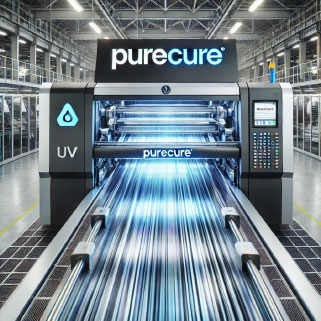
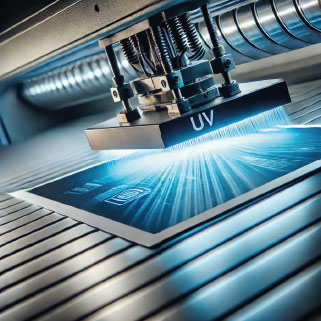
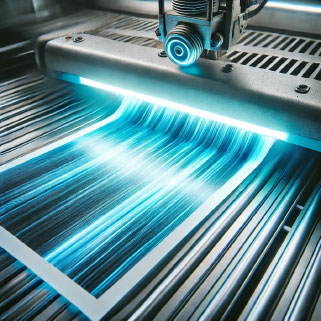
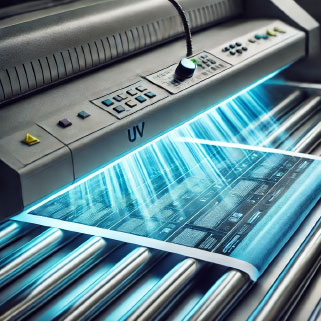
LED UV curing is already widely recognised for its increased energy and waste reduction, but PureCure™ Eco UV LED goes further still with lamps that are mercury and ozone free and can operate at up to as little as 20% of the energy of conventional UV lamps. PureCure™ Eco UV LED lamps also have a lifetime up to 20 times that of other market UV systems, they produce no consumable waste and are far safer and operator efficient.

UV LED lamps cure inks within milliseconds, enabling high-speed printing lines and reduced production time.

Plastic substrates are prone to warping, shrinking, or surface distortion under heat.
UV LEDs operate at low temperatures, preventing damage and ensuring consistent results.

UV LED inks are formulated to bond effectively with smooth plastic surfaces, improving:
Scratch resistance
Chemical resistance
Outdoor durability
Color vibrancy

Cost savings
Plastic substrates are prone to warping, shrinking, or surface distortion under heat.
UV LEDs operate at low temperatures, preventing damage and ensuring consistent results.

Faster production
The PureCure™ Eco LED UV System for Heideleberg printers
The PureCure™ Eco LED UV system offers Flexo and offset Heideleberg printers the ability to easily add on retro-fit Eco LED UV curing to most models of Flexo and traditional offset Heideleberg presses, quickly adding affordable, flexible, inline high speed curing to their existing processes.
PureCure™ Eco LED UV is affordable, energy efficient and highly eco-friendly, increasing productivity and job turnaround speeds allowing Heideleberg printed projects to move on to finishing processes much quicker.
PureCure™ Eco UV LED produces real job cost savings and profitability for users via reduced energy consumption & reduced sheet wastage and even allows the re-use of make-ready sheets.
PureCure™ Eco UV LED system is cleaner, removing the need for varnishes and sealers and removing material & print area contamination issues associated with spray powders
Key Benefits
Can be retro-fit
energy efficient
Eco-Friendly
increases productivity
reduced sheet wastage
Most efficient curing
Easy Maintenance
3. Superior Adhesion on Non-Porous Plastics
UV LED inks are formulated to bond effectively with smooth plastic surfaces, improving:
Scratch resistance
Chemical resistance
Outdoor durability
Color vibrancy
4. Energy-Efficient and Eco-Friendly
UV LED systems consume up to 70% less energy than mercury UV lamps and contain no ozone-producing emissions or hazardous materials.
5. Long Lamp Life and Lower Maintenance
LED lamps last 10,000–20,000+ hours, offering predictable performance and minimal downtime.
Best Plastic Materials for UV LED Print Drying
UV LED curing performs exceptionally well on:
PVC (rigid + flexible)
PET / PETG
PP / Polypropylene
PE / Polyethylene
ABS
Acrylic (PMMA)
Polycarbonate (PC)
** Vinyl films**
Lenticular plastics
Surface pre-treatment (corona, plasma, or flame) may enhance adhesion for some lower-surface-energy plastics, especially PP and PE.
Industries Using UV LED Print Drying on Plastic
Packaging & Labels
Bottles, containers, shrink sleeves
Flexible packaging
High-gloss labels
Industrial & Electronics
Appliance covers
Switch panels
Automotive plastics
Signage & Display
POP displays
Backlit signage
Rigid plastic boards
Promotional Products
Plastic pens
Phone cases
Personal accessories
Advantages Over Traditional UV Mercury Lamps
UV LED Drying
Lower heat output
Instant on/off
Longer lifespan
Energy efficient
No warm-up time
Environmentally safer
Traditional Mercury Lamps
High heat generation
Shorter bulb life
Contains mercury
Requires warm-up and cool-down
Higher energy usage
Technical Considerations for UV LED Curing on Plastic
Wavelength Selection
Typical wavelengths:
365 nm
385 nm
395 nm
405 nm
Most UV LED inks for plastic cure best between 385–395 nm.
Ink Compatibility
Use UV LED-curable inks specifically designed for:
Rigid plastics
Flexible plastics
Thin films
Surface Treatment
For difficult substrates like PE or PP, adding corona or plasma treatment improves adhesion and durability.
Intensity & Distance
Optimize lamp intensity (mW/cm²) and working distance to maximize curing depth and ink hardness.
Frequently Asked Questions (FAQ)
Will UV LED heat damage plastic materials?
No—UV LEDs run at much lower temperatures than mercury lamps, making them safe for heat-sensitive plastics.
Is UV LED ink safe for food packaging?
Yes, when using food-safe UV LED inks specifically formulated and certified for indirect food contact.
What printing methods support UV LED drying?
Digital/inkjet
Flexographic
Screen printing
Offset printing
Optimize Your Plastic Printing with UV LED Drying
UV LED print drying delivers unmatched speed, efficiency, and quality for printing on plastic substrates. Whether you’re producing packaging, signage, or industrial components, UV LED curing ensures fast-drying, durable, and vibrant results with reduced energy consumption and production costs
Does UV LED curing work on all plastics?
Most plastics are compatible, though some low-surface-energy plastics may require pre-treatment for optimal adhesion.